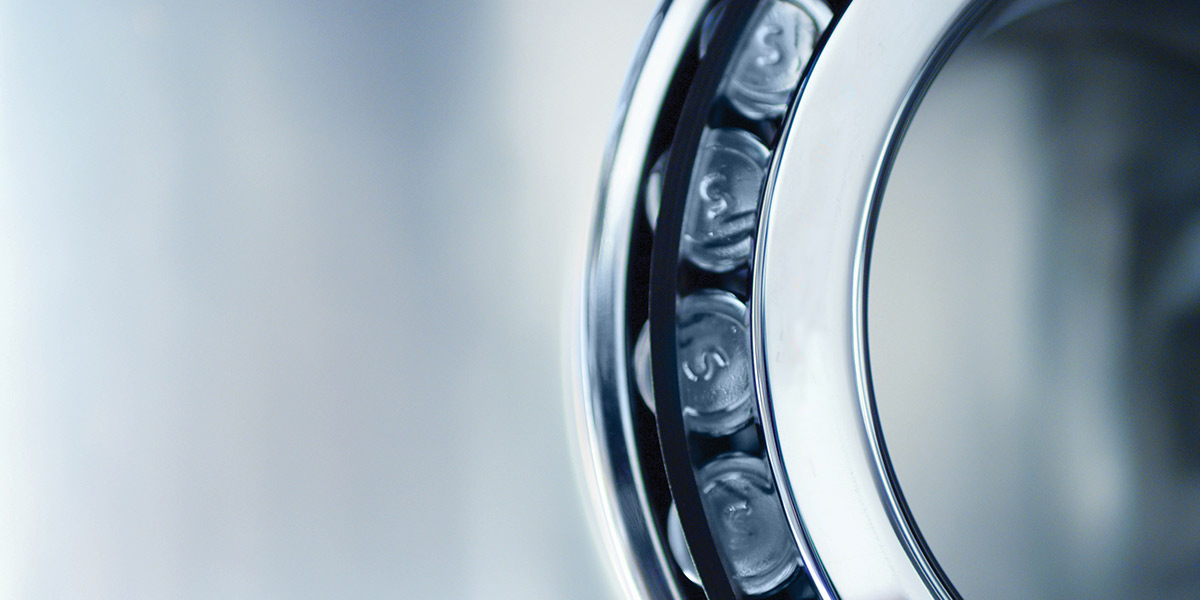
Self-Aligning Ball Bearings
Self-aligning ball bearings are designed for applications where small amounts of shaft deflection or alignment error may occur between the shaft and housing. Their two rows of balls run in a shared spherical raceway in the outer ring, allowing the bearing to adjust during operation.
They can be a practical option for maintenance teams that need reliable rotation without placing unnecessary stress on the bearing. Antifriction can help identify a suitable product for your machinery and operating conditions.
Contact Us to discuss your requirements.
What are self-aligning ball bearings used for?
Self-aligning bearings are often used where accurate alignment between the shaft and housing is difficult to maintain. Typical applications include transmission shafts, industrial fans and conveyor systems. They may also be suitable where shaft deflection is expected during normal operation.
The correct bearing still needs to match the operating load and speed. Contamination levels and lubrication requirements should also be considered.
Our wider bearings range includes other designs where a self-aligning ball bearing is not the best fit.
Types of self-aligning ball bearings
Self-aligning ball bearings are available in several configurations. The right choice depends on the shaft arrangement, mounting method and level of protection required.
| Type | Key characteristic | Selection consideration |
| Open bearing | Exposed rolling elements | Suitable where lubrication and contamination are controlled |
| Sealed bearing | Integrated protection | Useful where dirt or moisture may reach the bearing |
| Cylindrical bore | Fits directly onto the shaft | Requires the correct shaft fit |
| Tapered bore | Can be used with an adapter sleeve | May simplify mounting and removal |
Suitable bearing units and housings may also be needed as part of the complete arrangement.
How to mount self-aligning ball bearings
The correct mounting method depends on the bearing design and shaft arrangement. Cylindrical bore bearings require a controlled interference fit directly onto the shaft. Apply mounting force only to the inner ring when fitting onto a shaft (or the outer ring if fitting into a housing) to prevent brinelling the shared spherical raceway. Internal clearance is non-adjustable and determined by initial shaft tolerances. Tapered bore bearings should be mounted either directly onto a tapered journal or using an adapter/withdrawal sleeve.
Correct installation requires monitoring radial internal clearance reduction or measuring axial drive-up distance according to manufacturer guidance. Under-tightening causes sleeve slippage; over-tightening eliminates internal clearance, causing overheating and rapid failure.
Always use dedicated fitting tools (such as induction heaters or impact rings) and verify final torque settings against exact bearing designations.
How to install self-aligning ball bearings
Before installation, confirm the bearing designation and inspect the shaft and housing. Clean the contact surfaces and check the fits before applying the recommended lubricant.
After mounting, confirm that the bearing rotates freely and that nearby components have not been disturbed. A controlled test run can help identify unusual noise or heat before the machinery returns to normal service.
For technical help with product selection or installation requirements, contact us today
Our self-aligning ball bearing product catalogues
Our self-aligning ball bearing range includes products from established manufacturers, with options for different shaft arrangements and operating environments.
Explore our wider ball bearing range or review products available:
Product catalogues and technical data can help you compare dimensions and bore types. They can also clarify available sealing options.
If you have an existing part number or need help finding an equivalent, contact our team for specialised support.
 Antifriction